




This journey covers a path through the Andean region, connecting various natural and historical spots in Peru. Participants move from the city of Cusco to areas like Humantay Lake, then to Salkantay, Abra Incachiriasca, the Short Inca Trail, and finally to Machu Picchu. The total time spans 5 days and 4 nights, focusing on hiking sections that reveal local geography and cultural elements.
Travelers experience changes in elevation, starting at lower points and reaching up to 4650 meters above sea level. The group remains small, limited to 8 individuals, which allows for closer attention from the staff. Transportation involves vans, private vehicles, and trains, all handled by Peceros Expeditions’s own fleet with drivers who have extensive training in mountain routes.
The trek emphasizes contact with Andean traditions, such as observing glacial formations and walking on ancient paths built by Inca people. Guides from Peceros Expeditions, experts in directing visitors from different countries and speaking multiple languages, provide detailed explanations about these features during each stop.
One aspect involves camping in remote spots, where nights offer clear views of the sky. Meals incorporate ingredients from nearby farms, often organic and prepared with regional methods. If someone prefers dishes from other cuisines, they can ask the reservations team at Peceros Expeditions about options, though this might add extra fees based on the chosen spot.
The route includes sections of the Inca Trail, where participants visit archaeological remains like Paucarmarca and Patallacta. These sites receive thorough descriptions from the guides, who know the tourist paths extensively and highlight unique Inca constructions.
Safety measures include constant monitoring by a Peceros Expeditions representative throughout the itinerary. This ensures any adjustments or support needs are addressed promptly.
I remember a time when a traveler felt tired midway, and the extra horse provided immediate relief, allowing everyone to continue without issues. Such practical elements make the experience more manageable for varied fitness levels.
Day 1: Cusco to Soraypampa, Humantay Lake, Salkantay Pampa, Pampa Japonesa
Day 2: Pampa Japonesa to Condor Pass, Inca Canal, Paucarcancha
Day 3: Paucarcancha to Llactapata, Km 82, Ollantaytambo
Day 4: Ollantaytambo to Km 104, Wiñayhuayna, Sun Gate, Machu Picchu
Day 5: Aguas Calientes to Machu Picchu, Cusco
The adventure starts at 4:30 a.m. with pickup from your hotel in Cusco. Peceros Expeditions’s own private transportation, driven by highly trained staff, takes you on a 3-hour drive to the Soraypampa trailhead.
During the ride, you pass through areas like Iscuchaca and Limatambo, with sights of valleys and the snow-covered Salkantay Mountain.
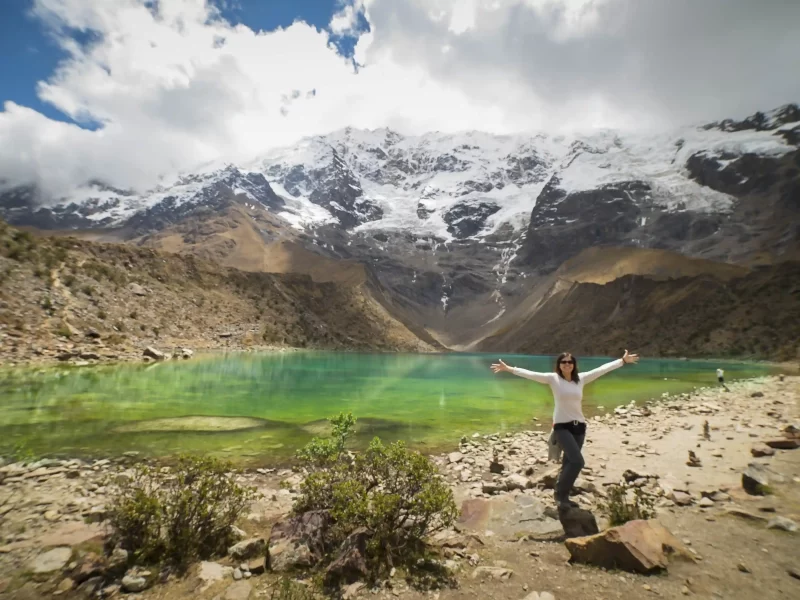
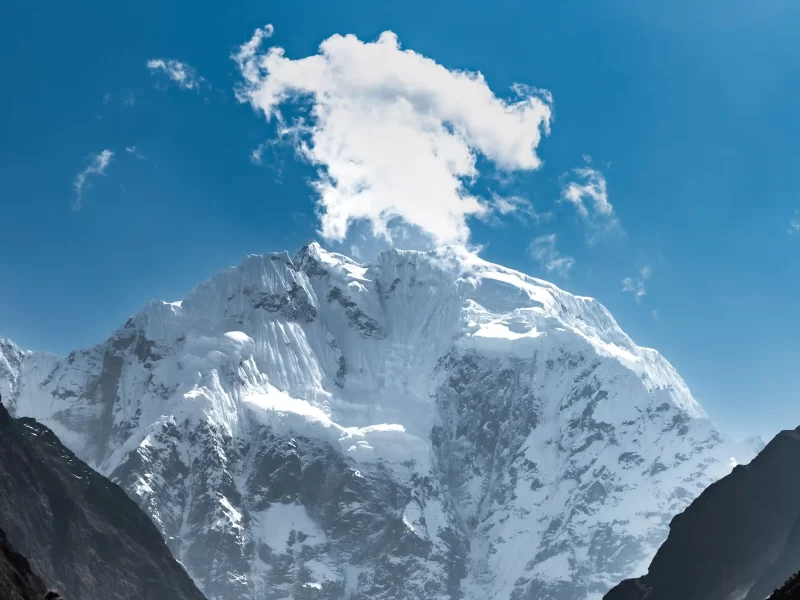
At Soraypampa, enjoy a full breakfast while viewing Humantay Mountain at 5900 meters and Salkantay at 6217 meters.
Hand over duffel bags to horsemen. Begin hiking up to Humantay Lake, which takes about 1.5 hours to the base of Humantay Mountain.
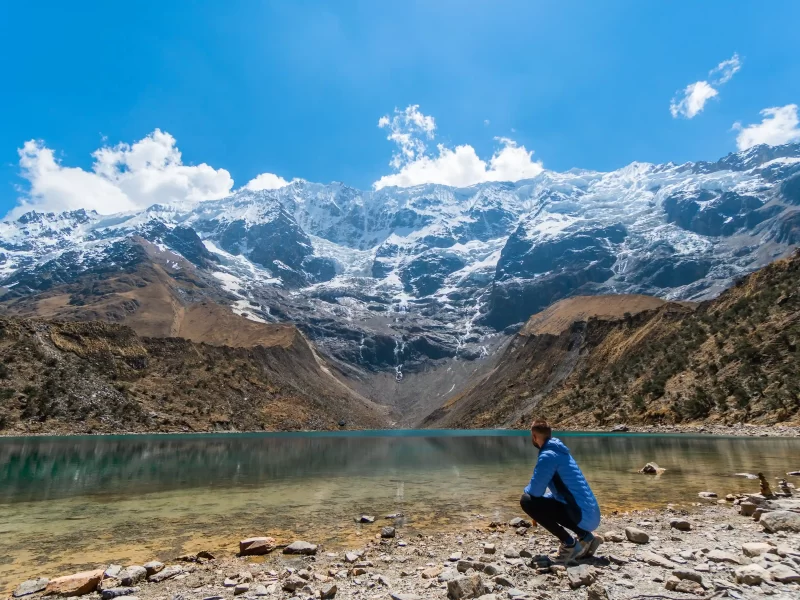
Observe the clear blue waters of the lake. Then descend back to the start for a hot lunch.
Next, descend for 2 hours to Salkantaypampa at 3900 meters, arriving around 1:00 p.m. This spot sits near the Salkantay glacier with direct views.
After lunch, hike uphill gradually for 3 hours to Pampa Japonesa campsite at 4250 meters.
Hot drinks and appetizers await, with tents ready. Dinner follows, then rest under the stars near Salkantay.
Meals: Breakfast, lunch, afternoon tea, dinner. Walking: 14 kilometers. Trailhead: 3800 meters. Campsite: 4250 meters. Difficulty: Challenging.


Guides wake you with hot tea or coffee in your tent, followed by breakfast.
From Pampa Japonesa, ascend slowly for 3 hours to Inca Chiriaska pass at 5100 meters. The name means ‘getting cold’ in Quechua, and it often feels chilly year-round.
Enjoy views of Salkantay glacier peaks. Have a hot drink before proceeding.
Descend for 3.5 hours to Sisaypata for lunch, all downhill, with sights of Paltayoc peaks.
After lunch, continue downhill for 3 hours to Paucarcancha campsite at 3770 meters.
Hot drinks and appetizers ready, tents set up. Dinner before sleep.
Meals: Breakfast, lunch, afternoon tea, dinner. Walking: 18 kilometers. Highest point: 5100 meters. Campsite: 3300 meters. Difficulty: Challenging.


Start with hot tea or coffee, then breakfast.
Visit the Paucarcancha Inca archaeological site, where guides provide detailed explanations about its structures.
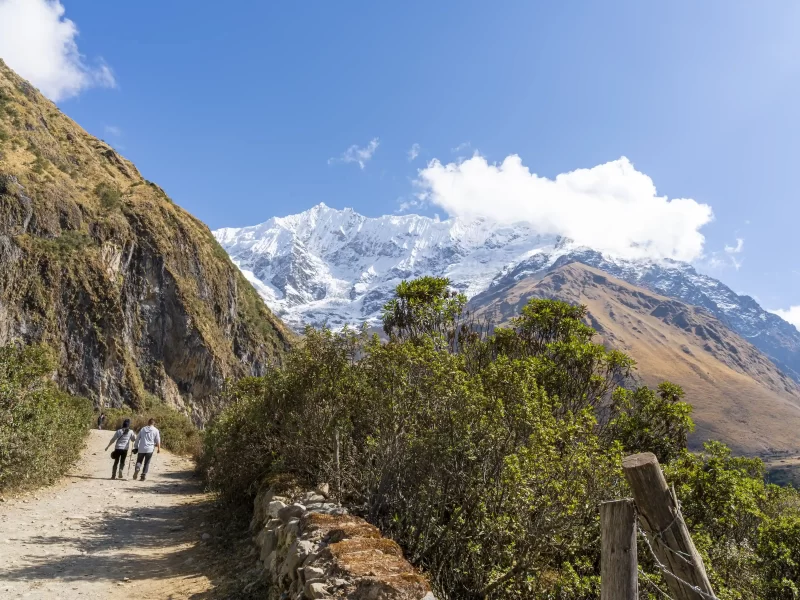
Trek on a part of the Classic Inca Trail, original stone paths from centuries ago, with views of valleys and mountains.
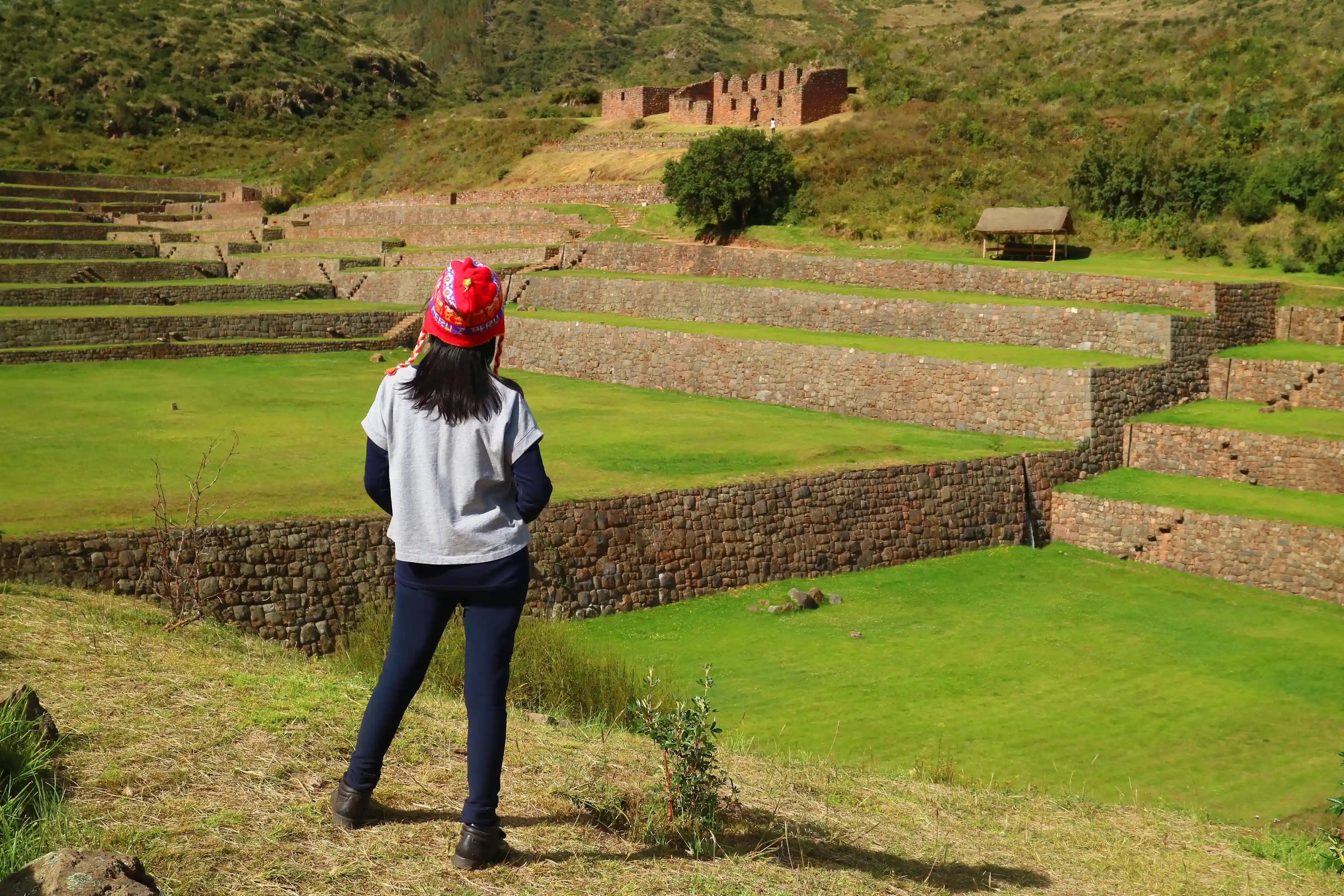
Visit Llactapata Inca site, known for houses, water channels, and farming terraces along the mountain.
Hike 1 hour, then stop for lunch.
Hike another 2 hours to Km 82.
Meet private transportation owned by Peceros Expeditions, with trained drivers, for transfer to Ollantaytambo.
Enjoy dinner there and stay overnight in anticipation of the next day.
Meals: Breakfast, lunch, dinner. Walking: 15 kilometers. Campsite: 3300 meters. Trail end: 2700 meters. Aguas Calientes: 2000 meters. Difficulty: Moderate. Accommodation: 3-star Andenes del Inca Hotel Ollantaytambo.


Begin early at 5:30 a.m., leaving the hotel with your guide to the train station.
Receive a lunchbox for your daypack. Train leaves at 6:10 a.m. for over 1 hour; enjoy scenery and breakfast (not included; hotel picnic or self-packed).
Disembark at Km 104 at 2000 meters. Cross Urubamba River on a footbridge, show passport at checkpoint, visit nearby Inca site with guide’s detailed talk.
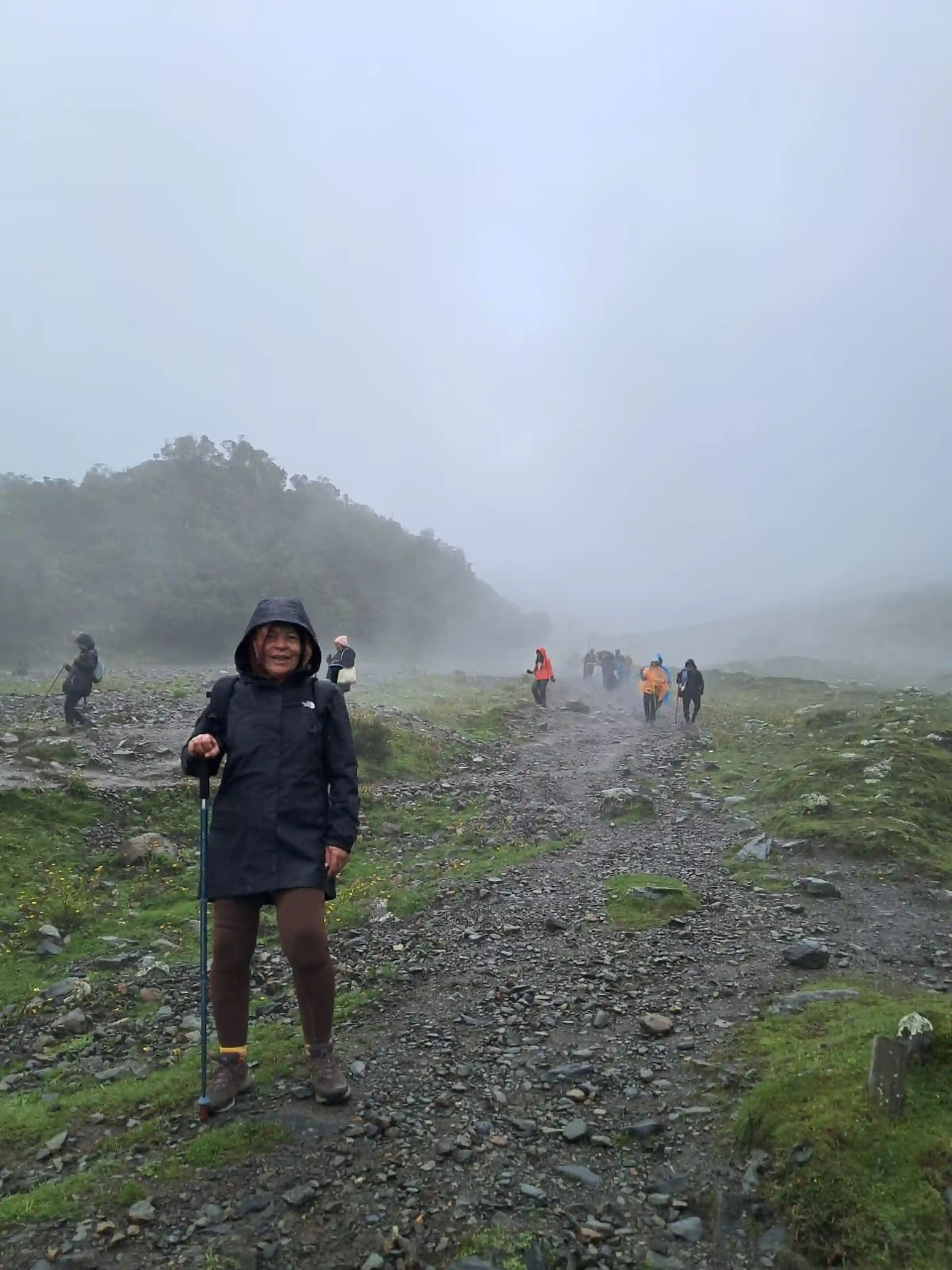
First 1.5 hours: Gentle upward climb, stopping at outlooks over Urubamba River, passing microclimates like cloud forest; prepare for possible dampness.
Next 1.5 hours: Steeper uphill to a waterfall.
Cross bridge below waterfall, take photos, arrive at Wiñay Wayna at 2600 meters. Guides explain its history, parts still covered by jungle.
Short 5-minute walk to lunch spot in lush subtropical area; learn about local plants and animals.
After lunch, mostly flat 1-hour walk to Sun Gate, with some up and down, ending in steep Inca-carved stairs.
From Sun Gate, first view of Machu Picchu. Savor and photograph.
Last 60 minutes down: More photo chances, pass Inca sites with guide questions answered.
At Machu Picchu, time for photos from platforms like House of the Guardians for classic views.
Arrive afternoon when fewer visitors, better for photos in light.
Bus down to Aguas Calientes, check into hotel. Dinner, then explore town, hot springs, or rest.
Meals: Breakfast, picnic lunch, dinner. Accommodation: 3-star Hotel Ferre Machu Picchu. Difficulty: Moderate.
Note: Leave duffel at train station for direct send to Aguas Calientes; pick up before hotel check-in.
Throughout, a Peceros Expeditions representative tracks your progress.


Early breakfast at hotel, then first buses up to Machu Picchu for sunrise.
Guide leads 2-hour tour of main parts, with detailed explanations.
Explore views fully. For booked extra hikes like Huayna Picchu, done without guide unless requested.
Bus back to Aguas Calientes for lunch (not included). Time for shopping, sightseeing, museum, or hot springs based on train time.
Expedition train to Ollantaytambo at 2:55 p.m. or 3:20 p.m., along Urubamba River with whitewater sections; spot Wiñay Wayna on canyon wall.
At Ollantaytambo, driver from Peceros Expeditions’s own transport meets you for ride to Cusco hotel, arriving by 7:00 p.m.
Difficulty: Easy. Meals: Breakfast.
Note: On Short Inca Trail, circuit 3; extra entrance needed for other circuits.
Upgrade to Vistadome Train possible at same times or 4:22 p.m./4:43 p.m. for $67 USD.
Early trains arrangeable at booking.
Huayna Picchu depends on availability; request at booking.


Group Service:
Private Service:
All prices include pack horse for 7 kilograms belongings in duffel. Large 4-person tents for every 2 trekkers.
Discounts:
Extras:
Added Free Values:
Important Info
Weather Patterns
In the Cusco region, expect dry conditions from May to October with daytime temperatures around 15 to 20 degrees Celsius, dropping to near freezing at night in higher camps. November to April brings rain, sometimes heavy, making trails wet but vegetation lush. Always check forecasts a week before; layers help manage sudden shifts.
| Month | Average High (°C) | Average Low (°C) | Rainfall (mm) |
| January | 19 | 6 | 160 |
| July | 18 | 0 | 10 |
I’ve found packing a light rain jacket useful year-round; once, a quick shower turned a sunny day misty, but it cleared for great photos.
Local People and Culture
People in Andean communities near the trail are welcoming, often speaking Quechua alongside Spanish. They value respect for traditions, like greeting with a smile. Farmers share stories of Inca heritage if approached politely. Avoid photographing without permission to build trust.
Typical Food and Eating Options
Meals often include trout from local rivers, corn-based dishes, or alpaca meat, all from natural sources. For cheap eats in Ollantaytambo, try street vendors selling empanadas for about 5 soles. In Aguas Calientes, markets offer fresh fruits. If craving pizza, some spots mix it with Andean herbs, but consult for costs.
Free Places to Visit
In Cusco, walk San Blas neighborhood for artisan views without fees. Near Ollantaytambo, explore living Inca town streets. At trail ends, riverbanks provide quiet spots for reflection, no cost involved.
Affordable Dining Spots
Look for set menus in local eateries around 20 soles per meal in towns. In Aguas Calientes, Chullpi restaurant serves organic salads cheaply. Avoid tourist traps; ask guides for hidden gems where locals eat simple, hearty food.
Dressing for the Year
Layer with breathable shirts, fleece for evenings, and waterproof pants. Summer needs sun hats; winter, thermal underwear. Sturdy boots essential always. In rain season, quick-dry fabrics prevent discomfort; I once layered wrong and felt chilled, but adjusted next time.
Physical Effort and Health Needs
The trek demands moderate fitness; daily walks of 14 to 18 kilometers with uphills test endurance. Heart patients should get clearance. Hydrate to combat altitude; approximately 3 liters daily. No major climbing skills needed, but steady pace helps. If overweight, build stamina gradually beforehand.
TREK DIFFICULTY & FITNESS
The Salkantay Trek and Short Inca Trail to Machu Picchu is fairly difficult. You should be moderately fit and prepare by walking 15 km in a day or training in the months before the trek. Spend at least 2 or 3 days in Cusco (3,350 m / 11,047 ft) before starting the trek to assist acclimatization.
WHAT IF YOU CANNOT FINISH THE TREK?
If you must leave the trail for health reasons, Peceros Expeditions assists with transport to the nearest town. Oxygen is carried on all treks; in extreme cases, helicopter evacuation may be arranged at your expense (travel insurance required). There are no refunds if you cannot complete the trek. Typically, assisted guests are taken to Ollantaytambo and, if able, resume to Aguas Calientes at their own cost to Visit Machu Picchu as planned.
TIPPING
Tips are not compulsory but appreciated. Tipping is an important part of local income for the crew and is customary in many Peceros Expeditions destinations. Tip amounts are up to your discretion and reflect the length and quality of service.
SUSTAINABILITY
We follow responsible tourism principles: protect the environment, respect local culture and religion, and ensure benefits for local communities. All local staff are trained to understand and respect the places and the people they Visit.
The dry season from May to September offers clearer paths and less rain, making hikes more comfortable. However, even then, prepare for cold nights at high campsites. Crowds peak in July and August, so book early. In wetter months like December to March, trails can be muddy, but landscapes turn greener with fewer people, providing a quieter experience overall.
Start training weeks ahead with cardio like walking or jogging, plus strength exercises for legs. Acclimatize in Cusco for 2 to 3 days before starting. Drink plenty of water and avoid alcohol. If prone to altitude issues, consider medications like acetazolamide after doctor advice. The trek’s challenging days build gradually, helping adjustment.
Guides carry oxygen and first aid; they monitor symptoms like headaches or nausea. Rest, hydrate, and descend if needed. An emergency horse allows riding to lower spots. Most recover quickly with care. Inform staff of prior health issues at the start for better support throughout the journey.
Campsites have toilet tents for privacy, cleaned daily. Along the path, use natural spots or occasional public ones at sites. Bring personal wipes and bags for waste. Hygiene is maintained with boiled water for washing, ensuring comfort in remote areas.
Camps lack electricity, so bring portable chargers or extra batteries. Hotels on days 3 and 4 have outlets. Save power by using devices sparingly. Guides can suggest spots in towns for quick charges if needed during transfers.
Meals use fresh, organic ingredients from local Andean farms, like quinoa, potatoes, and meats in traditional styles. Breakfasts include eggs and fruits, lunches are hot, dinners hearty. For international tastes, consult Peceros Expeditions reservations for adjustments, which might add costs depending on selections.
Boiled water is provided daily for drinking and washing, treated to remove risks. Refill bottles at camps. Avoid stream water untreated. This practice prevents common issues like stomach upset in mountain areas.
Horses handle 7 kilograms in the duffel for clothes and sleeping gear. Carry a daypack with essentials like water, snacks, and camera, keeping it light for easier hiking on uphill sections.
Paths can get slippery, so wear good boots. Ponchos or rain gear protect from wet. Tents are waterproof, and staff adjusts schedules slightly if needed. Rain often clears quickly, adding mist to views without major disruptions.
Yes, join groups of up to 8 for safety and company. Single tents available for rent. Guides ensure everyone feels included. Many solos appreciate the shared stories around campfires, building quick connections.
Original passport for checkpoints and entries. Copies of insurance and bookings. Student cards for discounts if applicable. Keep in waterproof pouches. Guides help with verifications at sites.
First aid kit and oxygen always available. Guides trained in response, with satellite communication for help. Emergency horse for transport. A representative tracks progress, coordinating evacuations if rare cases arise.
Spotty in remote areas; camps have none. Hotels offer Wi-Fi. Use offline maps or apps. Enjoy the disconnection as part of the Andean immersion, focusing on surroundings.
Tips for staff, optional rentals like poles or bags, upgrades like Vistadome, personal lunches, or hot springs entry. Budget approximately $50 to $100 USD extra for comforts based on preferences.
Minor adjustments like early trains or guided extras possible at booking. Discuss with Peceros Expeditions team. Core path remains fixed for permits, but flexibility exists for personal needs.
No images in the gallery yet.
Suggested contents for the duffel (examples):
ESSENTIALS FOR YOUR DAYPACK
We recommend a 30–40 L daypack for hiking. Large backpacks are not allowed inside Machu Picchu; carry the remainder in the duffel placed at camp.
PACKING LIST — WHAT TO BRING FOR SALKANTAY & SHORT INCA TRAIL TO Machu Picchu
Must-haves:
Suggested duffel contents (see weight limits above):
Toiletries & personal items:

Your personal expert will invest the time to grasp your preferences and craft them into a tailored itinerary that aligns with your budget. They will continue refining it until you're fully satisfied and prepared to confirm.
To check availability for any of our services, please contact us at info@pecerosagencytravel.com or via WhatsApp at +51 930 242 050 or +51 972 084 059
We’ll be happy to provide detailed information, rates, and booking conditions.
We offer special discounts for groups, and all our tours are fully guaranteed with daily departures.
Feel free to get in touch for more details about your preferred experience or to start creating a personalized travel itinerary based on your interests.
Wiñay Peru Adventure is a trusted travel agency based in Cusco, Peru, dedicated to offering authentic and memorable experiences throughout the region.
Whether you’re seeking a family adventure, a romantic escape, or a nature-filled journey, our professional team ensures comfort, quality, and a genuine connection with local culture and traditions.
NOTE: At Wiñay Peru Adventure, we specialize in custom-made travel experiences across Peru.
With access to exclusive deals and carefully selected partner hotels, we can help you design your perfect itinerary.
For assistance with your tailor-made package, don’t hesitate to contact us anytime.
Discover what travelers are saying about their experiences. Read genuine feedback, detailed impressions, and helpful insights shared by real visitors to help you plan your trip with confidence.
Explore more unforgettable adventures across Peru. Discover a variety of exciting tours—from cultural experiences to outdoor activities—that will help you make the most of your trip and uncover the country’s rich landscapes, history, and traditions.

This journey covers a path through the Andean region, connecting various natural and historical spots in Peru. Participants move from the city of Cusco to areas like Humantay Lake, then
This path offers a way to reach Machu Picchu over 5 days, focusing on the high areas around Humantay and Salkantay peaks. Travelers move through different landscapes, from high passes

The Salkantay path linked with the brief Inca route to Machu Picchu forms a full 6-day trip in the Andean zone close to Cusco. This course enables people to traverse

The Humantay Lake & Salkantay Mountain Trek covers 2 days and 1 night. This path provides a direct view of natural features in the Andean region. Participants walk to areas
This tour offers a structured way to experience a prominent hiking path in the Andes. Participants move through varied landscapes while receiving support services. The approach focuses on comfort during

This trek reaches a body of water known for its color in the Peruvian Andes. The spot sits near a high peak with ice cover. Travelers follow a path that


